Who we are
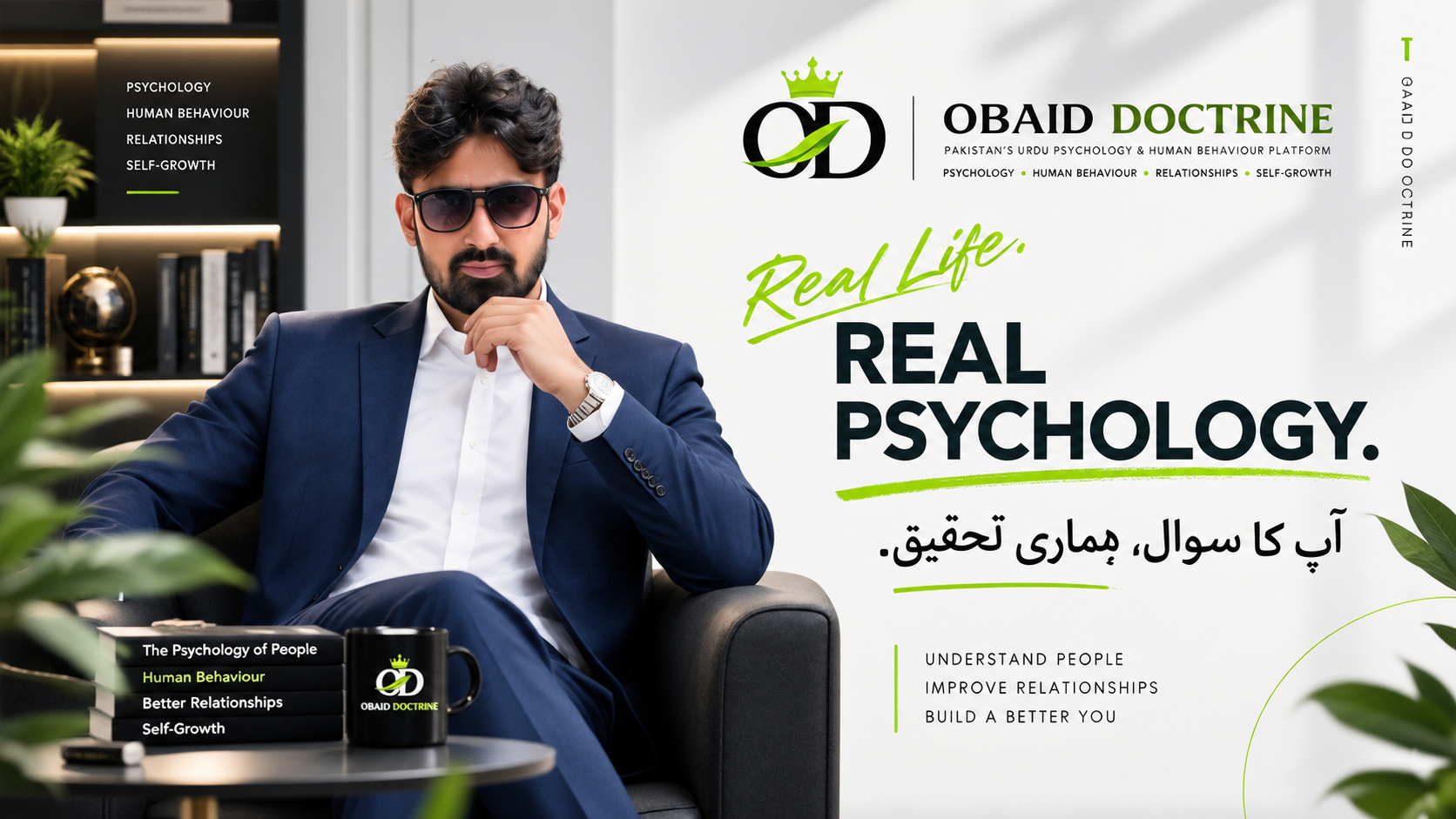
Obaid Doctrine is an independent educational platform created to make ideas about human behaviour easier to understand without presenting complex psychological research as simple rules that apply to everyone.
The platform publishes educational material in English and Urdu for readers interested in psychology, behaviour, relationships, family and society.
Founder
Obaid Mushtaq
Founder & Creator — OBAID DOCTRINE
Obaid Mushtaq leads the platform's content direction and aims to communicate research-informed ideas in a clear, practical and accessible way for a broad audience.
Our editorial approach
For factual claims, we aim to consult reputable psychological-science sources, research literature and established institutions where relevant. We distinguish evidence from interpretation and avoid presenting one study, correlation or popular claim as universal proof.
When evidence is limited, mixed or context-dependent, responsible educational writing should make those limitations clear. Psychological findings can vary by population, setting, culture, development and individual circumstances.
How we handle sources
- Prefer primary research and reputable professional or academic institutions when appropriate.
- Check the context of a finding rather than relying only on a headline or viral summary.
- Consider study design, population and limitations before making broad statements.
- Separate established evidence from opinion, interpretation and practical suggestions.
- Update or correct content when credible evidence shows that an important claim needs revision.
Corrections and feedback
If you notice a potentially inaccurate, outdated or unclear claim, please contact us with the article title or URL, the specific statement and a credible source where possible. We review substantive corrections in context rather than changing content solely because a claim is unpopular or disputed.
Contact: ObaidDoctrine@gmail.com
What Obaid Doctrine does not provide
Obaid Doctrine is an educational website, not a clinical service. Its articles do not provide individual diagnosis, psychotherapy, counselling, treatment or personalized clinical assessment. Readers experiencing significant or persistent distress should consider speaking with an appropriately qualified professional.
Use of AI and editorial responsibility
Digital tools, including AI-assisted tools, may be used to support research organization, drafting or editing where appropriate. Tools do not replace human editorial responsibility. Published material should be reviewed for accuracy, context, clarity and consistency with the platform's educational purpose.
Our goal
Our goal is simple: to help readers ask better questions about human behaviour and relationships, understand what evidence can and cannot tell us, and approach psychological ideas with curiosity rather than certainty.
For more information, see our Contact page, Privacy Policy, Terms & Conditions and Disclaimer.